Parkour Race - FreeRun Game
- 4.3
- Rating
- 50.00M
- Installs
- Free
- Price
 Analysis by App-foxy
I went into Parkour Race - FreeRun Game expecting a quick sports game, and that is exactly where it makes the best first impression. It puts me into short parkour races where the goal is not simply to run forward, but to keep moving through jumps, climbs, flips, and well-timed changes of direction. The presentation is bright and immediately readable, while the controls are simple enough to understand without a tutorial-heavy introduction.
That simplicity is important because the game is built around fast decisions rather than a long list of buttons. I can start a race, understand the basic gesture or tap-based interaction quickly, and concentrate on the route ahead. The experience feels closer to an arcade challenge than to a realistic sports simulation. That makes it easy to pick up during a short break, although players looking for detailed training, authentic athletics, or a deep career mode may find the design too lightweight.
Madbox has positioned this as a free sports game for a broad audience. It is rated Everyone, runs on devices using Android 8.0 or later, and has reached over 50 million installs. Those details match my impression of the game as something designed for immediate access rather than specialist players. It does not ask me to understand parkour terminology before I can enjoy a race.
You May Also Like

 Google Keep - Notes and lists
Google Keep’s Quiet Growth Shows the Appeal of Simpler Notes
As mobile work gets busier, Google Keep keeps winning a simple contest: capture a thought quickly, find it later, and get on with the day.

 Blood Strike: 2.5 Anniversary
Blood Strike’s Loadouts Turn Every Drop Into a Tactical Gamble
A close look at Blood Strike’s custom loadouts: how fast access to signature weapons reshapes its battle royale rhythm, rewards preparation, and narrows the gap between fights.

 Pandora - Music & Podcasts
Pandora’s Music Is Easy to Start, but Harder to Recover
Pandora’s strength is its low-effort path from a seed to a station. Its weak spot is how much confidence it asks you to place in connection, setup, and quiet recovery.

 8 Ball Pool
 Is Built on Rivalries, Rematches, and Routine
A close look at the rivalries, rematches, shared routines, and unanswered safety questions that turn a quick pool match into a persistent mobile community.

 Samsung Music
’s Quiet Strength Is Playing What You Already Own
Its reach comes less from spectacle than from dependable access to a personal library. That simplicity is both the app’s strongest retention engine and its ceiling.

 AccuWeather: Weather Radar
AccuWeather Review: A Quick, Clear Forecast for Everyday Decisions
For everyday plans, the best forecast is the one you can understand quickly. AccuWeather makes rain timing, radar, and local conditions easy to act on, with a few trade-offs.
More From Our News Desk



How the first races establish the game’s mood
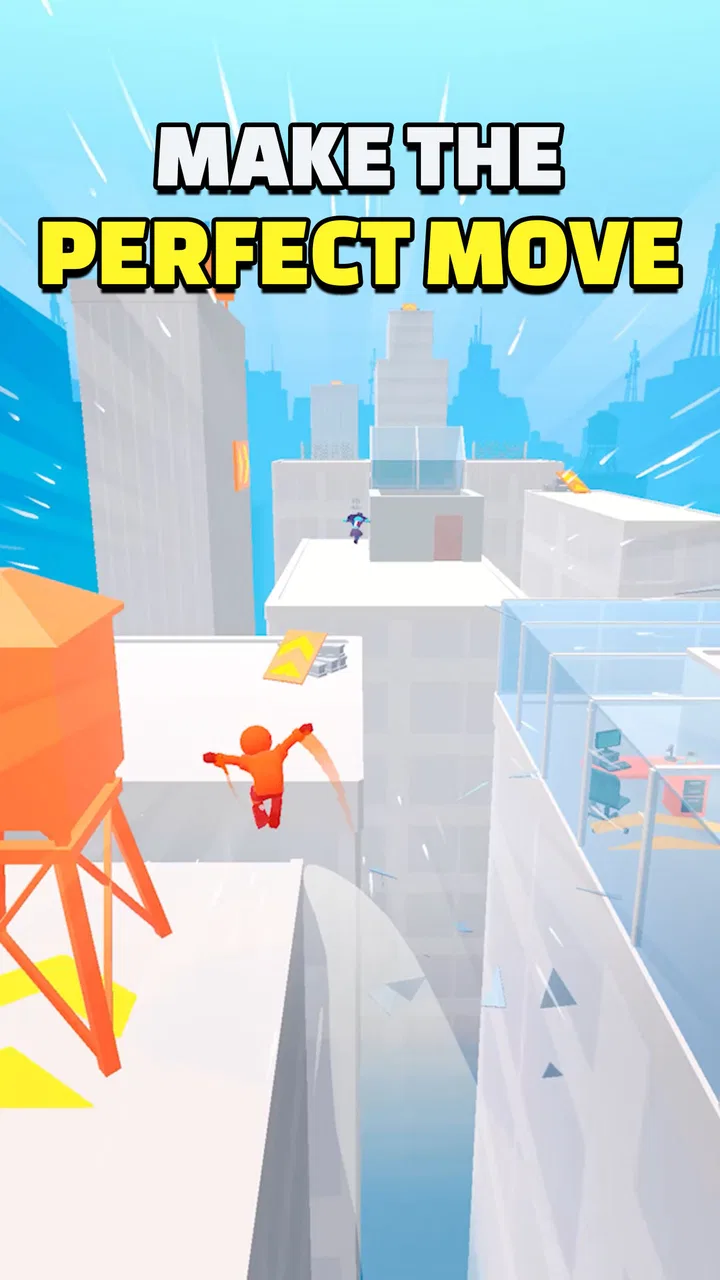
The opening experience works because the game communicates its central idea visually. I see a runner moving through an exaggerated urban obstacle course, and the action is framed so that the next jump or landing is usually the most important thing on screen. The setting is not trying to be a fully modeled city. Instead, it acts like a colorful playground built for motion.
That choice gives the game a clean identity. Buildings, platforms, gaps, and elevated routes become visual prompts. I am not studying a realistic environment; I am reading a sequence of opportunities. The best runs happen when I stop looking at the character as a person and start reading the whole course as a rhythm of launch points and landing zones.
The art direction also keeps failure from feeling too heavy. A missed jump is frustrating when I know I reacted late, but the overall style remains playful rather than grim. There is no sense that I have ruined a long sporting campaign. I can try again and immediately focus on the specific moment that went wrong. That quick recovery suits a mobile game, especially when I am playing one-handed or with only a few minutes available.
One useful habit is to watch the course slightly ahead of the character instead of staring at the runner. The character is visually appealing, but the route contains the information that matters. When I focus on the next platform, wall, or turn, I make fewer panicked inputs. This is one of the game’s less obvious lessons: the colorful presentation invites me to watch the action, while successful play requires me to anticipate it.
A world designed as visual instructions
The environments communicate through shape and color more than through story. I do not play because I need to discover a detailed fictional world. I play because each course turns an urban space into a compact puzzle of movement. That makes the setting coherent with the mechanics: every wall suggests a climb, every gap suggests timing, and every elevated section creates a reason to keep momentum.
This visual language is especially helpful on a small phone screen. A realistic environment could make the route difficult to read, but the simplified look separates the playable surfaces from the background. I can usually tell where the action wants to go without pausing to inspect the scene. The result is a game that feels animated and energetic without drowning the player in visual detail.
There is a trade-off, though. Because the world exists mainly to support the race, it does not offer the kind of exploration I would expect from a larger open-world parkour game. I am not wandering through a city to find hidden paths or building a personal route. The courses are more like stages in an arcade performance. If atmosphere for you means environmental storytelling, realistic architecture, or a sense of place beyond the track, this may feel thin.
For me, the restraint works better than it fails. The game’s visual identity stays focused on speed. Its world does not compete with the runner, and that matters when a fraction of a second can decide whether a jump connects. The setting is most successful when treated as a readable obstacle map rather than a destination.
Sound, movement, and the feeling of a short performance
The audio contributes to the game’s arcade mood by supporting movement instead of trying to become the main attraction. The overall impression is lively and immediate, matching the bright visuals and compact race format. Sound helps make jumps, impacts, and successful movement feel like parts of one continuous performance.
What I notice most is how closely the audio mood follows the pacing. A slow, dramatic soundtrack would make these races feel heavier than they are. The game instead benefits from an upbeat, uncomplicated tone. I can make several attempts without feeling that each one is a major event. That is useful when a course requires repetition, because the atmosphere encourages another try rather than turning failure into a punishment.
Players who prefer to play silently will not lose the core experience. The important information remains visual and mechanical. Still, audio makes the action feel more complete, especially when I am chaining movement cleanly. I would keep the sound on when I want the game to feel lively, but I would not describe it as a reason to choose the game by itself. Its job is to reinforce the movement, and it does that more effectively than it creates a separate musical identity.
The rhythm of play comes from the repeated cycle of approach, input, landing, and immediate preparation for the next obstacle. That cycle is more important than any individual trick. A flashy move looks good, but the real satisfaction comes from maintaining a clean flow through several obstacles. When I lose that rhythm, I usually start reacting late and making unnecessary corrections.
A practical tip is to avoid treating every jump as an isolated action. I try to decide what I want to do before the current landing finishes. This reduces frantic tapping and makes the character’s movement feel more controlled. The game rewards that forward-looking mindset, even though its controls remain accessible to casual players.
Where the controls fit the parkour idea
The controls are deliberately approachable, but approachable does not mean effortless. The challenge comes from timing and route reading rather than from mastering a complicated control scheme. I can understand the basic interaction quickly, yet consistent results require attention to spacing, momentum, and the next obstacle.
This is a good match for mobile play. I do not need a controller or a long uninterrupted session to make progress. The game’s short-race structure lets me play while waiting for an appointment, taking a break from work, or relaxing at the end of the day. In an everyday situation, I might start with the intention of playing one race, fail because I mistime a landing, and then spend several more minutes trying to correct that single mistake. The restart-friendly design makes that loop feel natural.
The same design can become repetitive. Since the interaction is simple, long sessions depend on whether I enjoy refining timing and chasing better outcomes. Players who need new mechanics constantly may feel that the game’s core loop does not expand enough. It is better suited to someone who enjoys small improvements than to someone searching for a substantial sports campaign.
Another trade-off is the difference between visual excitement and mechanical depth. The character may perform dramatic parkour actions, but I am not manually controlling every part of the movement like I would in a simulation. The game selects accessibility and flow over technical realism. That is the right decision for its audience, but it means the title should not be judged as a serious representation of parkour.
Compared with a traditional running game, this one puts more emphasis on vertical movement and obstacle timing. Compared with a realistic sports game, it is much faster to learn and far less demanding in terms of rules or player management. Compared with a large action game featuring freerunning, it offers less exploration and fewer layers around the movement. Its advantage is focus: I open it for a compact race, not for a broad adventure.
Progress, repetition, and the free-to-play balance
The game is free to download, which makes trying it straightforward. It also includes in-app purchases ranging from $3.99 to $99.99 per item. That pricing range is worth keeping in mind before settling into a longer session, particularly if the player is younger or shares a device with family members. The Everyone rating makes the game approachable, but age suitability does not remove the need for sensible purchase controls.
I would approach the progression as an arcade loop rather than a promise of endless novelty. The main reason to continue is the desire to perform better, handle a difficult sequence, and enjoy the visual reward of a clean run. That can be satisfying, but it depends on your tolerance for repetition. If you want a game that steadily introduces complex systems, detailed character development, or a large collection of activities, another sports title may serve you better.
The strongest way to play is to set a small personal target for each session. I might focus on reaching the next section without a mistake, improving the timing of one jump, or completing a race without making unnecessary inputs. This keeps the experience from becoming a vague attempt to “win” every time. It also makes the simple mechanics feel more deliberate.
One of the game’s practical strengths is that it does not require me to commit to a long match. That makes it a useful alternative to sports games that ask for a full contest or a longer management session. On the other hand, if I am in the mood for strategy, team building, or a detailed recreation of a real sport, the short parkour race cannot replace those experiences. It is a focused snack, not a full meal.
Who will enjoy it and who should skip it
I would recommend this game to players who like quick arcade challenges, colorful movement, and the satisfaction of improving through repeated attempts. It is also a good fit for someone who wants a sports-themed game without learning a rulebook. The broad age rating and low entry barrier make it easy to share with casual players, while the timing-based races give experienced mobile gamers something to refine.
I would be more cautious about recommending it to players who dislike repetition, expect realistic parkour physics, or want a large world to explore. The game’s mood is energetic, but its scope is intentionally narrow. It asks whether I can read the next obstacle and respond at the right time, not whether I can build a long-term sporting career.
It may also be a poor choice if you want a completely passive experience. Although the controls are simple, the best results require concentration. Looking away for a moment can be enough to miss a landing, and the bright presentation should not be mistaken for a game that plays itself. Its accessibility comes from the control layout, not from the absence of timing demands.
For families, I would treat it as an easy-to-understand game that still deserves the usual attention around optional purchases. For commuters and short-session players, the compact race format is attractive. For competitive players, the appeal depends on whether improving execution is enough motivation without a deeper ranking or simulation layer. Those are different expectations, and the game is much more enjoyable when I choose it for what it actually offers.
Performance expectations and the current package
The current version is 1.14.9, and the game’s popularity is reflected in an average rating of 4.3 from around 199 thousand ratings, alongside roughly 5.8 thousand written reviews. I read those figures as a sign that the basic concept connects with a large mobile audience, not as proof that every player will enjoy the same pacing. A short, accessible race can be appealing to millions while still feeling too repetitive for someone seeking depth.
The developer, Madbox, has kept the identity centered on quick visual action rather than complicated presentation. That consistency helps the game feel approachable from the first launch. I do not need to understand a large menu system before reaching the central activity, and the art, sound, and movement all point toward the same arcade mood.
My main caution is about expectations over time. The first sessions are easy to enjoy because the idea is immediately clear. The longer-term question is whether the player likes practicing the same kind of timing across different situations. I found the game most rewarding when I treated each race as a small execution challenge, not when I expected a constantly expanding sports experience.
It is also worth remembering that a free game with optional purchases can create a different rhythm from a paid premium title. Players who prefer to buy once and receive a complete, uninterrupted experience may feel more comfortable with a premium alternative. Players who value quick access and are happy to ignore or manage optional spending will find the free entry more convenient.
My verdict on the playable atmosphere
Parkour Race - FreeRun Game succeeds because its art direction, sound, and pacing all support the same idea: a bright, fast parkour performance that can be understood in seconds. The urban setting is simplified into a clear route, the audio reinforces the upbeat movement, and the short races make repeated attempts feel manageable. Nothing about the presentation suggests realism, and that honesty works in its favor.
I especially like the way the atmosphere helps me return to a failed attempt without frustration becoming too serious. A missed jump is a prompt to adjust my timing, not a reason to abandon a long campaign. When I focus on the course ahead, prepare for the next landing early, and set small goals, the simple mechanics have more depth than the first few minutes suggest.
At the same time, this is not the right game for every sports fan. It does not replace a simulation, a deep career game, or an exploratory action title. Its world is built for racing, its sound is there to maintain momentum, and its progression is most convincing when measured in better runs rather than broad character development. Those limits are clear, but they are also part of its identity.
With a free price, an Everyone rating, support for Android 8.0 and later, and a large existing audience, it is easy to give the game a try. I would recommend it to anyone who wants a colorful mobile sports challenge that fits into spare moments. If your ideal game is a focused test of timing wrapped in an upbeat parkour mood, this is a worthwhile download; if you need realism or lasting strategic depth, choose a different kind of sports game.
FAQs for Parkour Race - FreeRun Game
01What is Parkour Race - FreeRun Game?
Parkour Race - FreeRun Game is a fast-paced mobile racing game focused on rooftop parkour. You control a runner who jumps, flips, wall-runs, and uses shortcuts to reach the finish line before opponents. Matches are designed to be quick and easy to understand, making the game suitable for short play sessions while still rewarding timing, route selection, and well-executed stunts.
02How do you play Parkour Race - FreeRun Game?
The gameplay is built around simple touch controls, so you generally tap or swipe at the right moment to jump, perform tricks, and move through the course. Success depends less on complicated controls and more on recognizing obstacles, choosing efficient paths, and maintaining momentum. As the tracks become more challenging, accurate timing becomes increasingly important if you want to finish ahead of the other runners.
03Can Parkour Race - FreeRun Game be played offline?
Some portions of Parkour Race - FreeRun Game may work without a continuous internet connection, particularly basic running or practice-style gameplay. However, online competitions, advertisements, leaderboard features, event content, and certain reward systems may require connectivity. Availability can also vary between versions and devices, so it is best to launch the game online at least once before relying on it during travel or offline periods.
04Is Parkour Race - FreeRun Game free to download and play?
Parkour Race - FreeRun Game is generally available as a free download, allowing you to begin playing without paying upfront. Like many free mobile games, it may include advertisements and optional in-app purchases for cosmetic items, bonuses, or other progression-related benefits. You can usually enjoy the core races without spending money, but purchases and ad frequency may affect the overall experience.
05Is Parkour Race - FreeRun Game suitable for children?
The game is easy to understand because it uses cartoon-style visuals, short races, and straightforward touch controls. Nevertheless, parents should check the age rating, advertising content, and available in-app purchases before allowing younger children to play. If the device is shared with a child, enabling purchase restrictions and reviewing privacy permissions is recommended, especially because online features or advertisements may be present.
Pros
- Fast-paced races are easy to start and usually finish within a minute.
- Simple controls make the game accessible for casual players.
- Tricks and jumps add variety beyond basic running.
- Short levels work well for quick gaming sessions.
- Unlockable characters and outfits provide extra customization.
Cons
- Frequent ads can interrupt the experience
- especially between races.
- Progress may feel repetitive after mastering the same obstacle patterns.
- Some upgrades and cosmetics can encourage in-app purchases.
- Touch controls may feel imprecise during fast or crowded sections.
- The game requires an internet connection for some features and ads.

Parkour Race - FreeRun Game
Gallery